Blog

Study Tip: Thyrotoxicosis

Thyrotoxicosis (Thyroid Storm) – a form of severe hyperthyroidism that can be precipitated by stress, injury, or infection. It is a life-threatening emergency. Manifestations of thyroid storm include temperature above 102 degrees F (39 degrees C) – with this high temperature, all organ systems will be affected, tachycardia, abdominal pain, systolic hypertension, N/V, confusion, agitation, tremors, and possible seizures. Management of treatment requires careful follow-up by an endocrinologist. Medications include antithyroid medications and radioactive iodine.

Content area: Med-Surg | Endocrine

Study Tip: Dilated Cardiomyopathy

Dilated Cardiomyopathy – a disease that causes the enlargement of all the chambers of the heart, usually starting in the left ventricle which is heart’s main pumping chamber. The ventricle stretches, dilates, and unable to pump blood as it should. There is decreased cardiac out and decrease contractility as a result. Causes of primary cardiomyopathy is unknown, secondary cardiomyopathy may be caused by ischemia, infection, or metabolic disorders.
Cardiomyopathy is a common cause of heart failure and dysrhythmia, dilated cardiomyopathy can also contribute to irregular heartbeats (arrhythmias), blood clots or sudden death. Treatment include digoxin, antidysrhythmics, beta blockers, and calcium channel blockers. Heart transplantation may be considered if the damage to the heart is considered to be permanent and unrecoverable.

Content area: Med-Surg | Cardiac

Study Tip: Status Asthmaticus

Status Asthmaticus – a severe, life-threatening acute exacerbation of asthma attack that is unresponsive to initial treatments and interventions for asthma attack with bronchodilators. Status Asthmaticus places the client at high risk for respiratory failure. The client has acidosis, hypoxemia, hypoxia, and hypercapnia; all of these together with effects of increase lung volume place the client at risk for pneumothorax and cardiac arrest. Status asthmaticus is considered a medical emergency.

Content Area: Med-Surg – Respiratory

Critical Thinking Question

Studying, planning and getting ready for your exams. Practice some critical thinking questions as you study; get yourself ready for success!

Complications of Cirrhosis

One of the complications of cirrhosis is Hepatic Encephalopathy. This is a neurological problem resulting from too much ammonia in the blood. Medications for the treatment of Hepatic Encephalopathy include Lactulose and Neomycin.

Question:

A client is undergoing treatment for Hepatic Encephalopathy. What are two main goals (objectives) of therapeutic management for this client?

Leave your answers in the comments

Answer is on Page 2 below

NCLEX Pharm: Heparin

Class: Anticoagulant

Indication:

  • Prevention of clotting in arterial and heart surgery
  • Disseminated Intravascular Coagulation (DIC)
  • Atrial fibrillation with embolization
  • DVT and Pulmonary embolism

Side effects:

  • Hematology: Thrombocytopenia, bleeding, bruising, injection-site reactions,
  • Skin: hair loss,
  • GI: liver enzyme changes

Nursing Tips:

  • Heparin is a High Alert Medication
  • Adjust dose based on lab results.
  • Dosage is considered adequate when the activated partial thromboplastin time (APTT) is 1.5 to 2 times normal
  • Give by deep subcutaneous injections; do not give IM.
  • Have protamine sulfate on hand as antidote.
  • Protect clients from injury, report bleeding gums, black or tarry stools, and severe headache.
  • Avoid intramuscular route of administration because of the frequent occurrence of hematoma at the injection site.
  • Always follow facility’s heparin protocol, whenever working with this medication.

Ref: Roach’s Introductory Clinical Pharmacology

To Your Success!

Rophem 🙂

NCLEX Pharm: Lunesta

Generic Name: Eszopiclone

Brand Name: Lunesta

Class: Sedative, Hypnotic, Nonbenzodiazepine

Indication: Sleeping pill, Lunesta is used to treat insomnia.

Side effects: Confusion, clumsiness or unsteadiness (older adults), daytime anxiety and/or restlessness, difficulty with coordination (older adults), mood or mental changes.

Adverse effects: Headache, chest pain, migraine.

Nursing Tips:

  • Lunesta may be habit-forming.
  • Contraindicated in liver disease; breathing disorder.
  • Contraindicated in History of depression, mental illness, or suicidal thoughts.
  • Contraindicated in history of drug or alcohol addiction.
  • Teach clients to avoid alcohol, it can lead to very serious interactions.

Ref: Roach’s Introductory Clinical Pharmacology

To Your Success!

Rophem 🙂

Pharm: MAOIs and Tyramine Foods

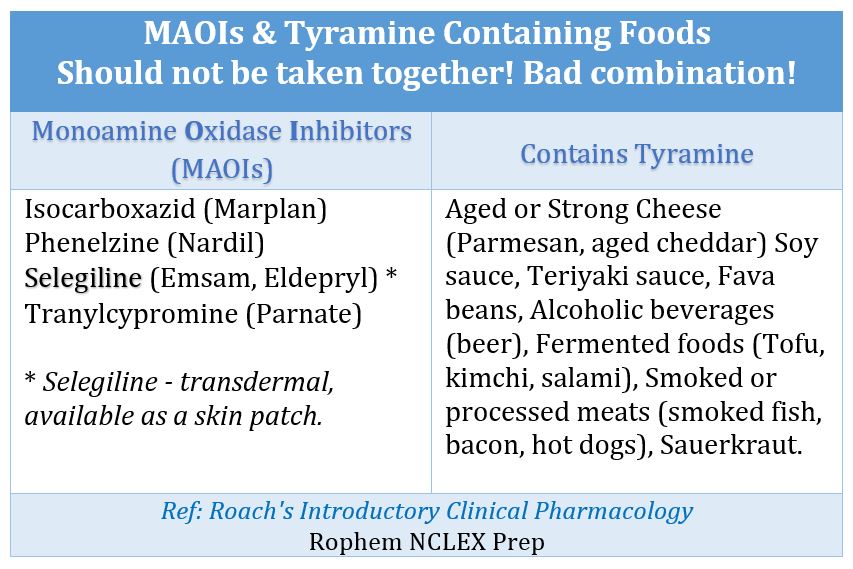
Monoamine Oxidase Inhibitors (MAOI) are

  • Best known to be powerful anti-depressants.
  • They are effective therapeutic agents for panic disorder and social phobia.
  • MAOIs are tried when other antidepressants don’t work, due to side effects.
  • MAOIs can cause dangerous interactions with foods and beverages that contain Tyramine. See table below.

Tyramine

  • Tyramine is an amino acid that regulates blood pressure
  • It occurs naturally in the body, and it’s found in certain foods.

Important: Clients taking MAOIs will need to avoid foods containing high levels of tyramine.

Common side effects of MAOIs include:

  • Dry mouth, Headache, Drowsiness
  • Nausea, diarrhea or constipation
  • Dizziness or light-headedness
  • Skin reaction at the patch site

Nursing Implications:

  • Monitor for occipital headache, nausea, vomiting, sweating, fever, chest pain.
  • Notify the MD quickly, if client complain of any of the signs above.
  • Monitor for other drug interactions e.g. sedatives, hypnotics, & analgesics.
  • Check if client is taking Herbal products – St John’s wort has a potential for adverse reaction when taken with antidepressants.

To Your Success!

Rophem 🙂