Read more about the Remedial Course here –

Month: January 2019
NCLEX Pharm: Heparin
Class: Anticoagulant
Indication:
- Prevention of clotting in arterial and heart surgery
- Disseminated Intravascular Coagulation (DIC)
- Atrial fibrillation with embolization
- DVT and Pulmonary embolism
Side effects:
- Hematology: Thrombocytopenia, bleeding, bruising, injection-site reactions,
- Skin: hair loss,
- GI: liver enzyme changes
Nursing Tips:
- Heparin is a High Alert Medication
- Adjust dose based on lab results.
- Dosage is considered adequate when the activated partial thromboplastin time (APTT) is 1.5 to 2 times normal
- Give by deep subcutaneous injections; do not give IM.
- Have protamine sulfate on hand as antidote.
- Protect clients from injury, report bleeding gums, black or tarry stools, and severe headache.
- Avoid intramuscular route of administration because of the frequent occurrence of hematoma at the injection site.
- Always follow facility’s heparin protocol, whenever working with this medication.
Ref: Roach’s Introductory Clinical Pharmacology
To Your Success!
Rophem 🙂
NCLEX Study Tips
NCLEX Pharm: Lunesta
Generic Name: Eszopiclone
Brand Name: Lunesta
Class: Sedative, Hypnotic, Nonbenzodiazepine
Indication: Sleeping pill, Lunesta is used to treat insomnia.
Side effects: Confusion, clumsiness or unsteadiness (older adults), daytime anxiety and/or restlessness, difficulty with coordination (older adults), mood or mental changes.
Adverse effects: Headache, chest pain, migraine.
Nursing Tips:
- Lunesta may be habit-forming.
- Contraindicated in liver disease; breathing disorder.
- Contraindicated in History of depression, mental illness, or suicidal thoughts.
- Contraindicated in history of drug or alcohol addiction.
- Teach clients to avoid alcohol, it can lead to very serious interactions.
Ref: Roach’s Introductory Clinical Pharmacology
To Your Success!
Rophem 🙂
Pharm: MAOIs and Tyramine Foods
Monoamine Oxidase Inhibitors (MAOI) are
- Best known to be powerful anti-depressants.
- They are effective therapeutic agents for panic disorder and social phobia.
- MAOIs are tried when other antidepressants don’t work, due to side effects.
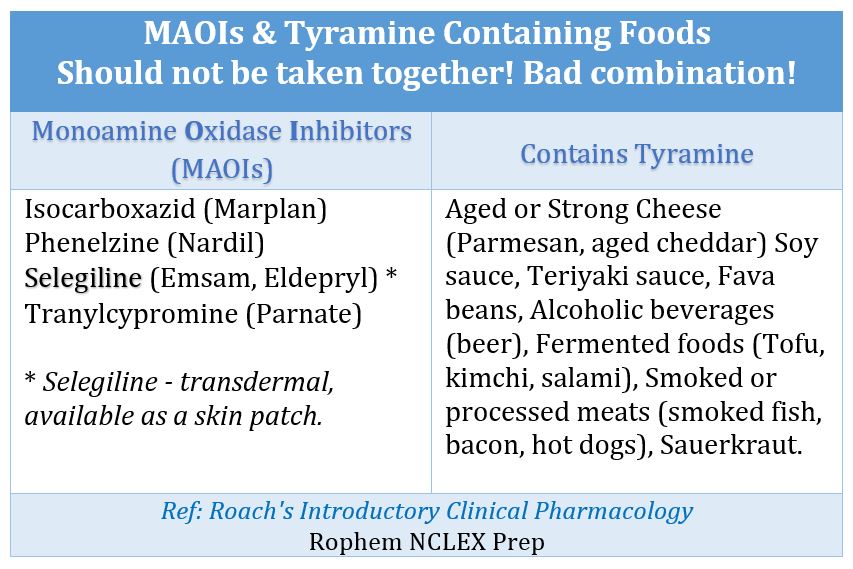
- MAOIs can cause dangerous interactions with foods and beverages that contain Tyramine. See table below.
Tyramine
- Tyramine is an amino acid that regulates blood pressure
- It occurs naturally in the body, and it’s found in certain foods.
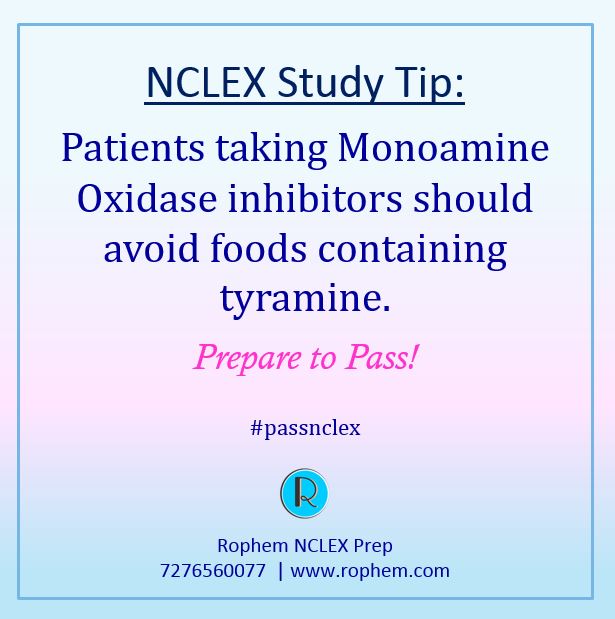
Important: Clients taking MAOIs will need to avoid foods containing high levels of tyramine.
Common side effects of MAOIs include:
- Dry mouth, Headache, Drowsiness
- Nausea, diarrhea or constipation
- Dizziness or light-headedness
- Skin reaction at the patch site
Nursing Implications:
- Monitor for occipital headache, nausea, vomiting, sweating, fever, chest pain.
- Notify the MD quickly, if client complain of any of the signs above.
- Monitor for other drug interactions e.g. sedatives, hypnotics, & analgesics.
- Check if client is taking Herbal products – St John’s wort has a potential for adverse reaction when taken with antidepressants.
To Your Success!
Rophem 🙂


